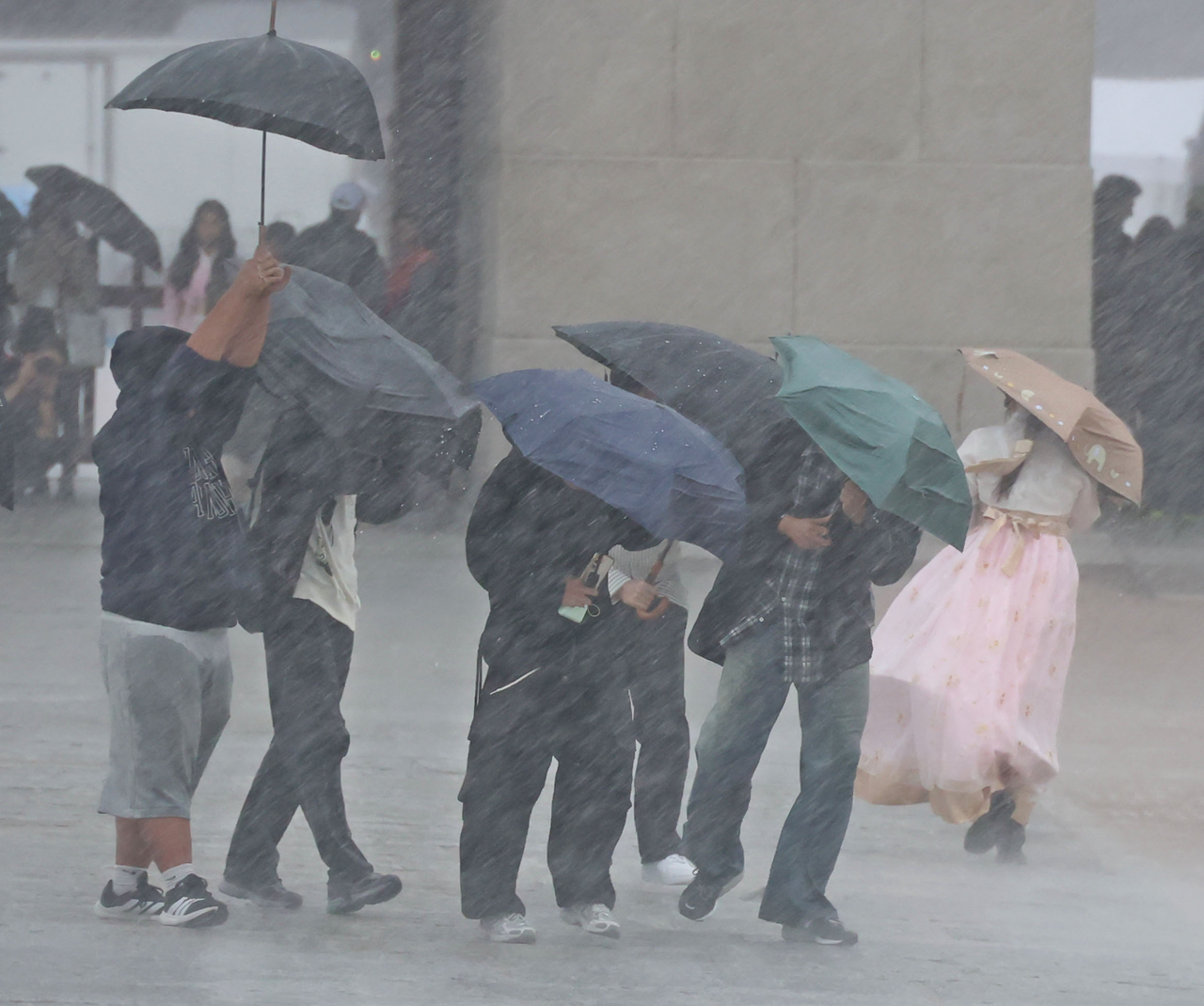
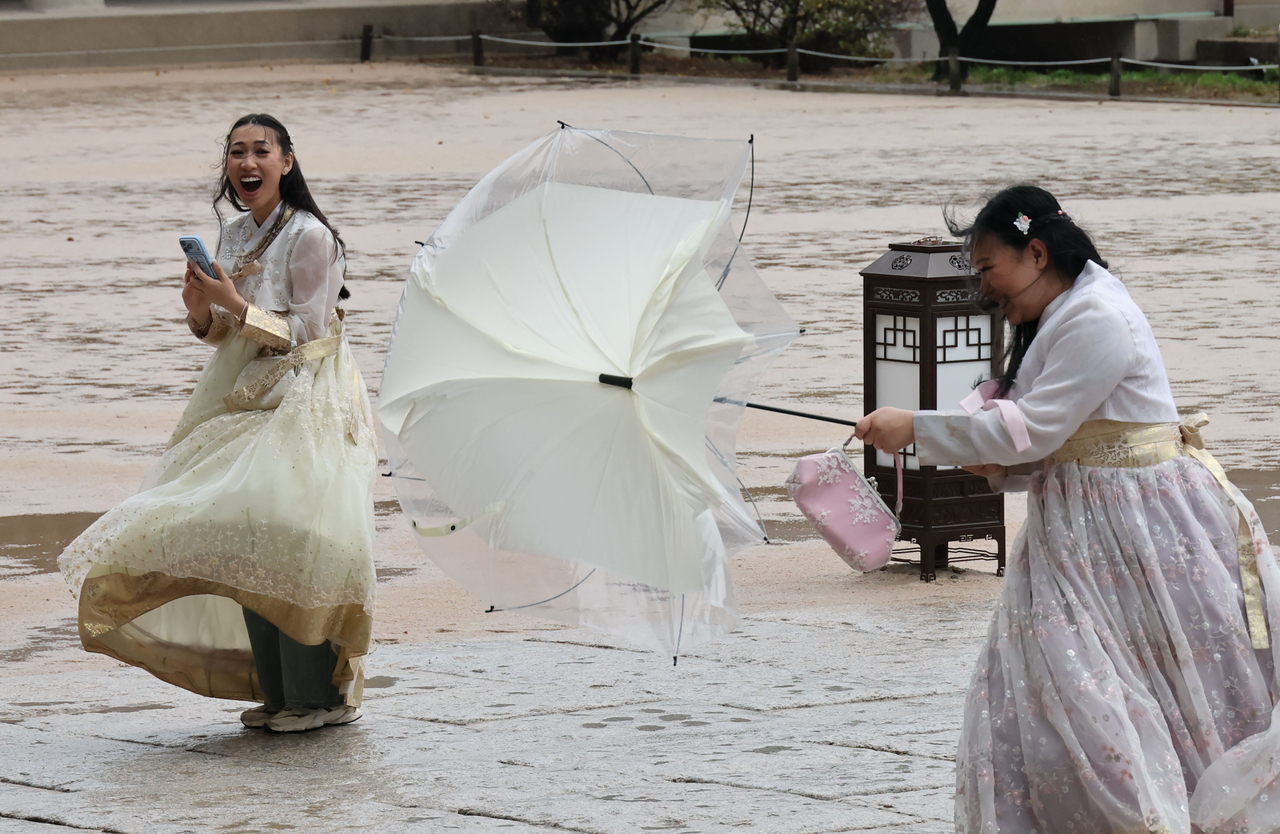
Heavy rain battered Seoul on Sunday, leaving roads flooded, trees uprooted and traffic disrupted across the city.
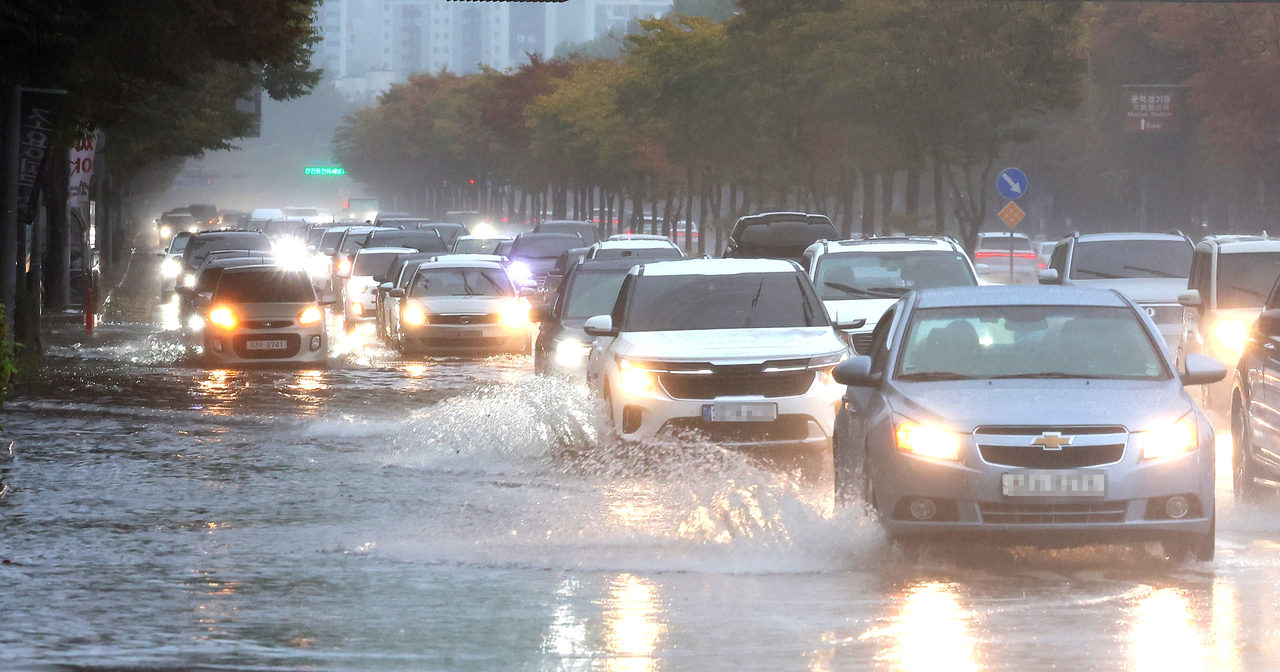
Flooding forced the closure of the underpass beneath Jeungsan Bridge in Seodaemun-gu in both directions at 3:04 p.m., before traffic resumed at around 4:17 p.m., according to the Seoul Metropolitan Government's traffic information system.
Several expressway sections, including the Yangjae-Anseong stretch of the Gyeongbu Expressway, were also affected by heavy rainfall and strong winds.
In Yeoksam-dong, Gangnam-gu, a fallen tree reportedly blocked a road, disrupting vehicle and pedestrian traffic.
Floodwaters near Yeonsinnae Station in Eunpyeong-gu rose above knee height in some areas, slowing traffic. Water levels in Jungnangcheon Stream also surged following a sudden downpour.
Experts say the flooding may have been exacerbated by fallen leaves clogging storm drains, preventing rainwater from flowing away.
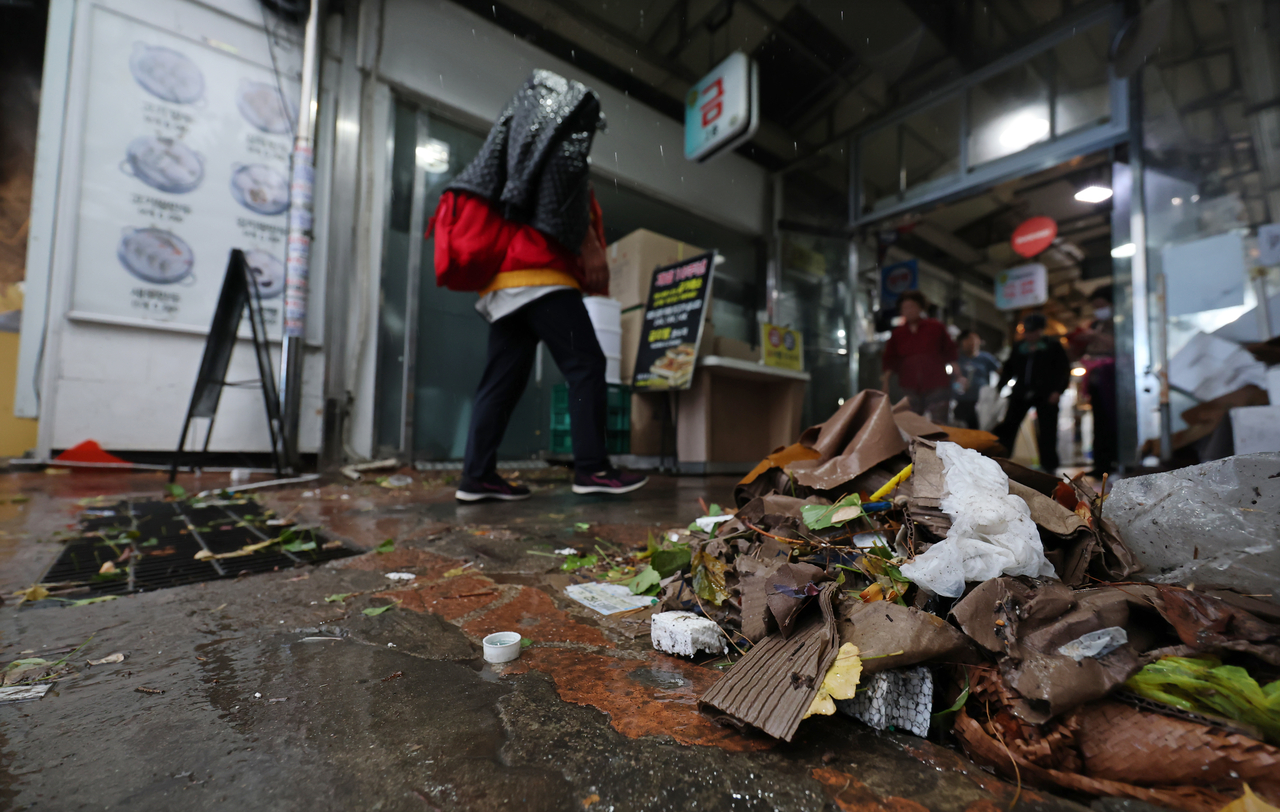
The Korea Meteorological Administration had warned of such risks days earlier. At a press briefing Thursday, the agency cautioned that a passing low-pressure trough resembling a cold front could bring unusually heavy rainfall for autumn.
"As the rain coincides with the season when leaves are falling, some areas may experience drainage problems due to clogged storm drains," the agency said, urging authorities and residents to take precautions.
Rain is expected to gradually subside from the northwest by late afternoon as a low-pressure trough moves eastward.
The rain, however, is forecast to persist in southern parts of the country through Monday morning and until around 3 p.m. on Jeju Island.
The KMA predicted a sharp drop in temperatures after the rain clears, as cold air moves southward from the northwest. Starting Wednesday, temperatures are expected to fall by around 4 degrees Celsius compared with last week, with daytime highs ranging from 15 C to 22 C.
cjh@heraldcorp.com